
DFor several years now, the term «eco-friendly» has been stripped of its meaning by the giants of the textile marketing industry. Any T-shirt made from 5% recycled polyester is now plastered with reassuring green labels without a shred of verifiable scientific evidence. At Kanten, we’ve always believed that the only credible response to the climate emergency lies in radical transparency and rigorous data measurement.
To assess the environmental footprint of our products with surgical precision, we commissioned Deceo, an independent consulting firm specializing in eco-design for textiles, the development of a Multi-Criteria Life Cycle Assessment (LCA) complies with the international standards ISO 14040 and ISO 14044.
The LCA Methodology: From the Cotton Field to the End of Life
The study conducted by Deceo examined every stage of the manufacturing process for our clothing, from «cradle to grave»:
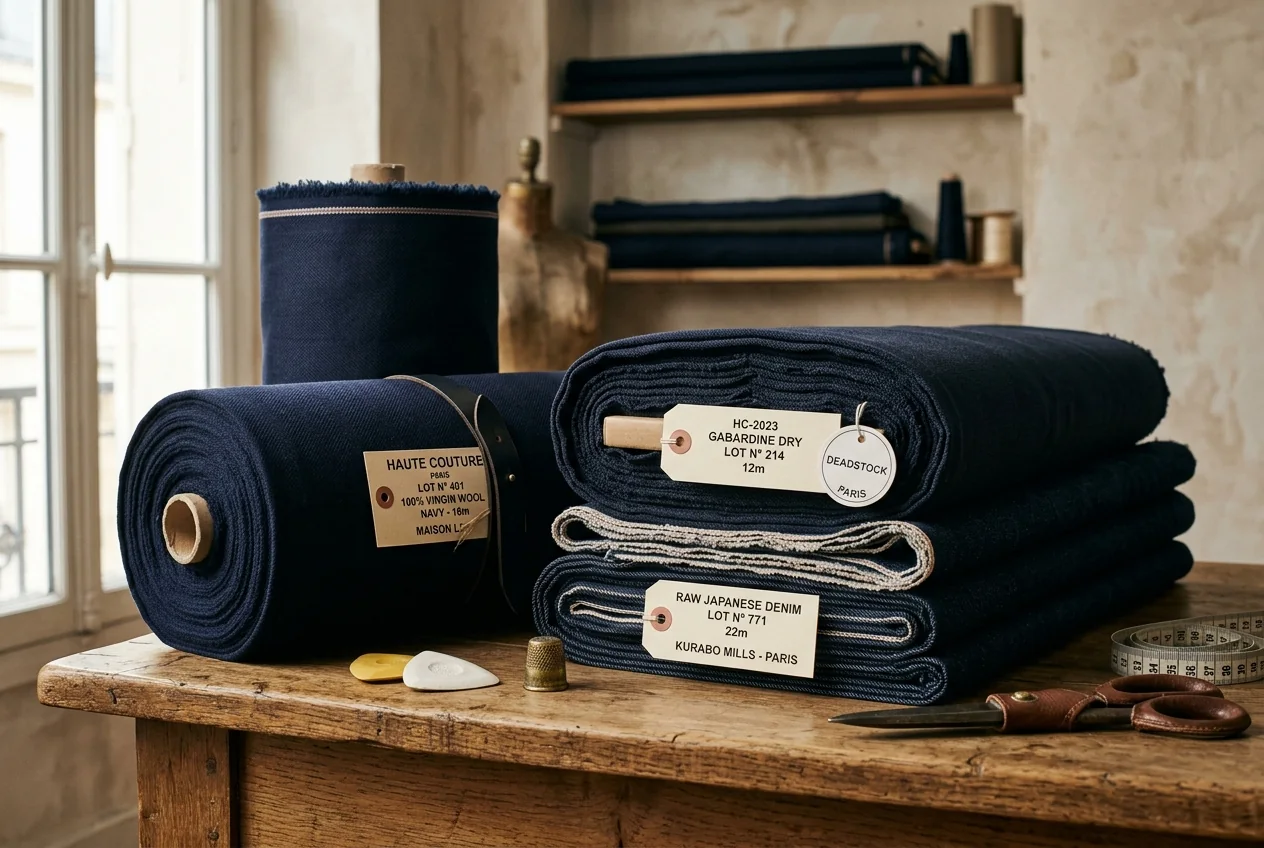
- Phase 1 — Raw materials: GOTS-certified organic cotton grown during the seasonal rainy season, shearing of virgin wool, and recovery of deadstock rolls from the haute couture industry.
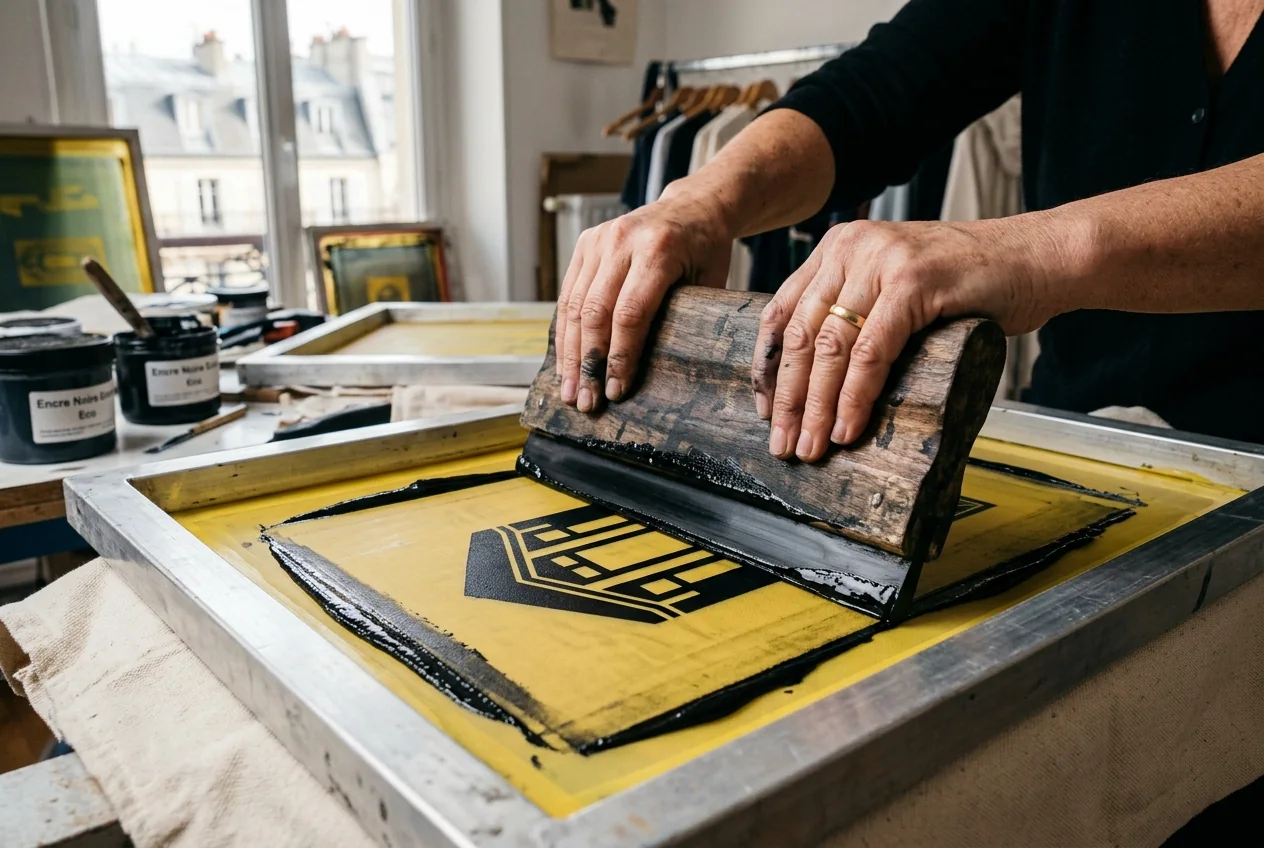
- Phase 2 — Processing & Refining: Spinning, weaving within the European supply chain, Oeko-Tex-certified dyes, and artisanal screen printing with water-based ink in Paris.
- Phase 3 — Fabrication & Assembly: Electricity consumption at our Paris workshops; patterns and finishes are handmade.
- Phase 4 — Logistics & Distribution: Exclusive ground freight, packaging made from recycled and compostable kraft paper without plastic film.
- Phase 5 — Use & Maintenance: Energy consumption of wash cycles among our customers and the potential for repair in a service center.
«Measuring helps us know where to take action. The findings of the Deceo audit show that by combining luxury upcycling with local manufacturing in Paris, Kanten reduces the carbon footprint of a garment by nearly two-thirds.»
Deceo Audit Report — Kanten Environmental Assessment
Comparative Results: The Evidence Speaks for Itself
To provide a concrete measure of our performance, Deceo compared a complete Kanten outfit (outerwear coat + heavyweight jersey T-shirt) to an equivalent outfit from the mid-range ready-to-wear industry imported from Asia:
1. Carbon footprint: 2.4 kg CO₂e compared to 7.8 kg CO₂e
Avoiding air transport for finished parts, combined with the use of France’s carbon-free electricity mix for our manufacturing machinery, reduces CO₂-equivalent emissions released into the atmosphere by more than two-thirds.
2. Water Consumption: The Benefits of Rain-Fed Cotton and Upcycling
A conventional cotton T-shirt requires up to 2,700 liters of irrigation water diverted from fragile aquifers. The organic cotton in our Kanten T-shirts is grown without forced artificial irrigation, relying solely on seasonal rainfall. In addition, our upcycled luxury materials do not consume absolutely no additional liters of agricultural water (Discover our upcycling program).
Our Next 3 Challenges for Improvement
A sincere commitment to environmental responsibility is never perfect—it constantly strives for improvement. The Deceo audit highlighted three priority areas on which we are actively working:
- Packaging tape: Replace the current adhesives with 100% water-reactivatable, plant-based kraft paper adhesive tape.
- Screen-printing pigments: Experiment with inks made from Breton brown algae and vegetable charcoal residue as a substitute for standard mineral pigments.
- End of life: Implement a deposit system that allows us to buy back old Kanten parts for remanufacturing in our Custom Lab.
Beyond the Numbers: A Concrete Commitment
Measuring our impact does not exempt us from taking action to restore biodiversity. That is why we supplement our reduction efforts with a direct commitment: for every purchase made in our store, we donate 1% of our revenue to environmental organizations working on the ground. Learn more about our philanthropic efforts at Sea Shepherd and Canopée or browse our designs in the Shop Kanten.
Matching pieces in the Kanten wardrobe

Flupke Eco-Designed Jacket
Locally made, upcycled fabric, and magnetic clasps: the hallmark of a reduced carbon footprint.
240g Jersey T-shirt
GOTS-certified organic cotton grown without forced irrigation or synthetic pesticides.

Our Community-Focused Philanthropy
1% from each order is donated to protect marine sanctuaries and primary forests.

 English
  French