
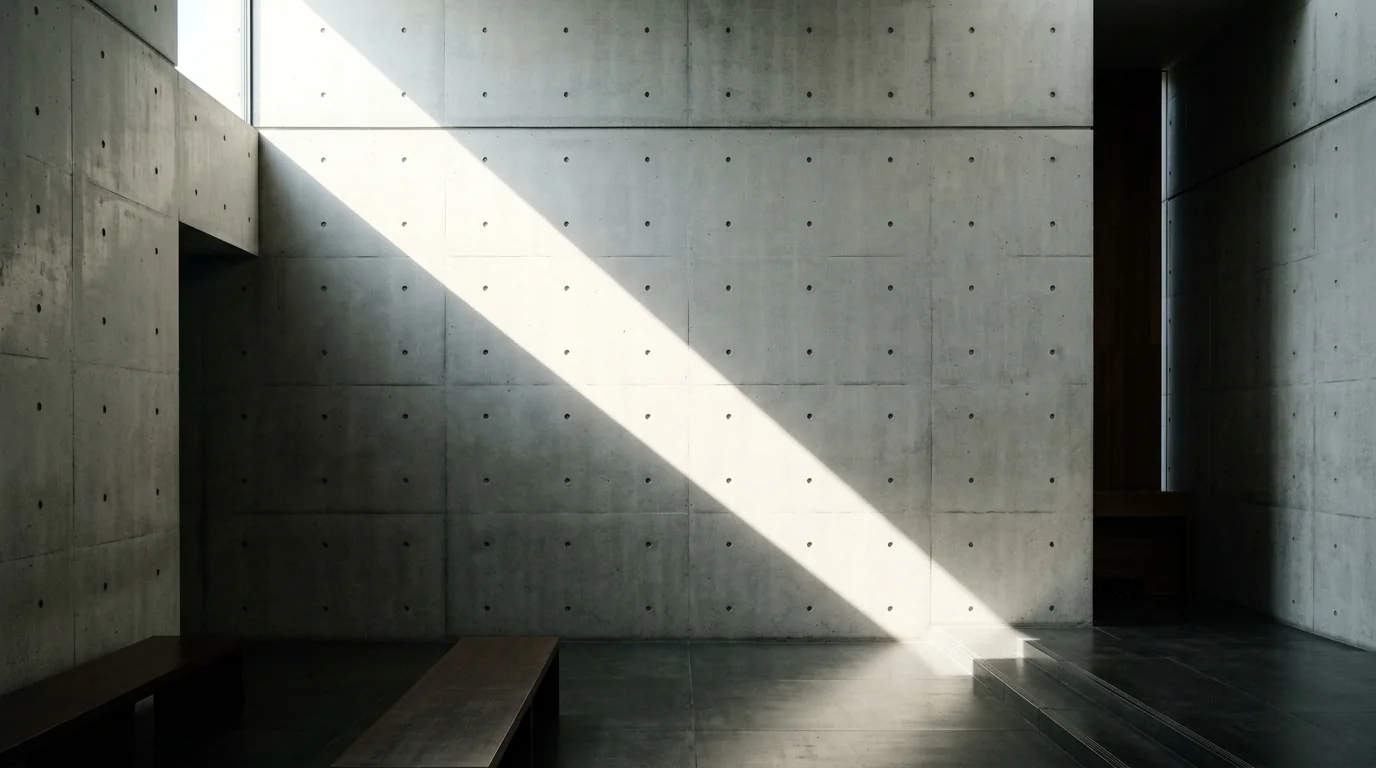
DEver since our first sketch was drawn on a Parisian workbench, a fundamental question has guided every cut of Kanten’s scissors: how can we liberate the body without compromising on elegance? The answer lies neither in an excess of ornamental details nor in the fleeting dictates of the seasons. It lies at the intersection of two major aesthetic cultures: the meditative silence of Japanese minimalism and the meticulous precision of Parisian haute couture, all sculpted by the earth-shaking force of Tadao Ando’s brutalist architecture.
In the classical Western sartorial tradition, clothing has long sought to mold, structure, and sometimes constrain the body to enforce a rigid posture. In contrast, Japanese aesthetic thought conceives of clothing as a protective environment—a textile micro-architecture where the body breathes, undulates, and lives in complete freedom.
The Concept of Ma (間): When Active Emptiness Brings the Silhouette to Life
At the heart of this approach lies the philosophical concept of Ma (間). In Japanese culture, the My never refers to a barren void, but rather to an intermediate space saturated with meaning and potential energy—similar to the silence suspended between two musical notes on a score, or to that imperceptible gap of air between the fabric and the skin that gives a garment its full range of movement.
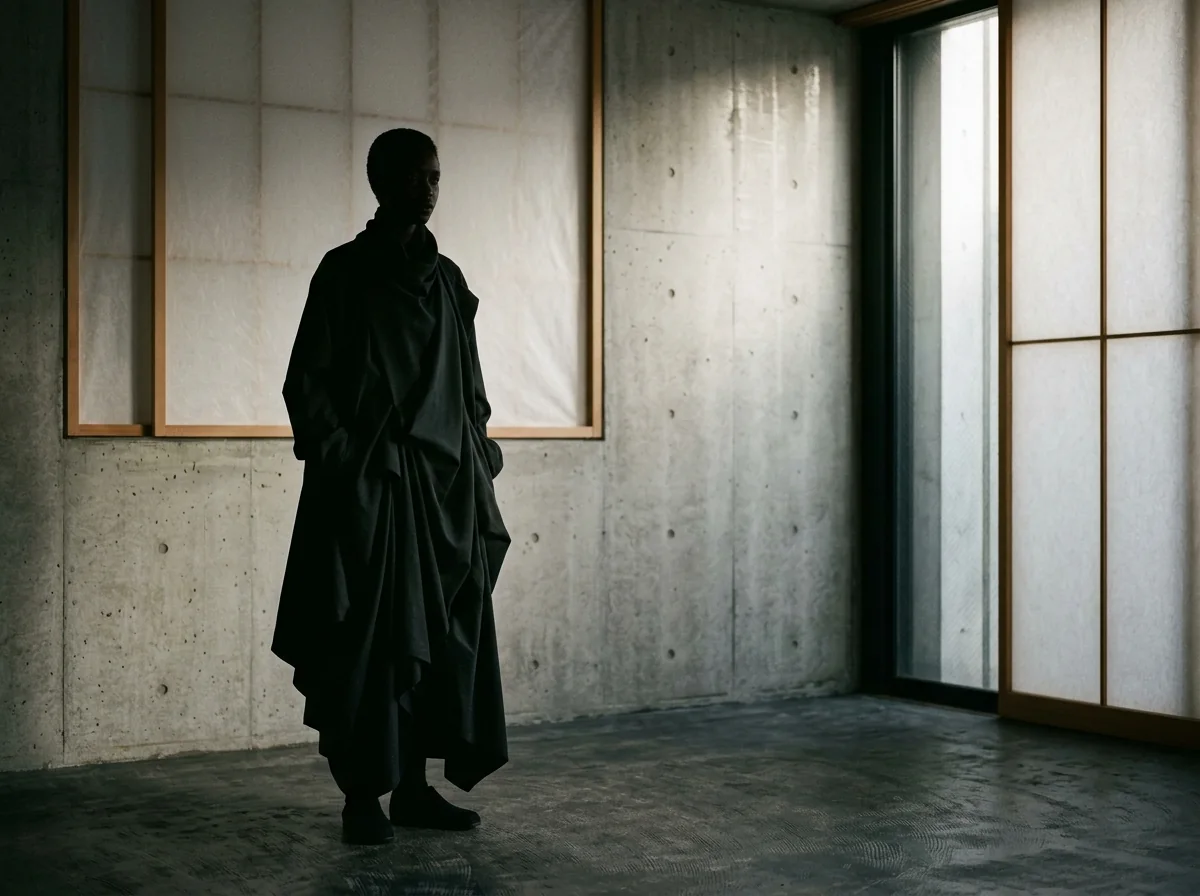
At Kanten, our iconic designs—whether it's the magnetic shirt Hanpi, wide-pleated pants Haka or our iconic Flupke jacket — praise this space. The low armholes known as «drop shoulders,» the loose-fitting backs, and the flowing cutouts are not merely stylistic devices: they restore the wearer’s personal space, paying direct homage to the traditional clothing of feudal Japan (the samue Edo artisans, the noragi the countryside and the hakama (martial), reimagined through the deconstructivist modernity of masters such as Yohji Yamamoto and Issey Miyake.
Tadao Ando & Brutalism: The Poetry of the Line and the Invisible Magnetic Joint
Pritzker Prize winner, the self-taught Japanese master Tadao Ando has managed to transform the supposed coldness of brutalism into a spiritual experience of rare intensity. By pouring reinforced concrete into varnished wooden forms of absolute uniformity, he achieved a smooth, silky texture—almost velvety to the touch—punctuated by the geometric pattern of the clamping cones and pierced by slits of low-angle natural light—as in the'Church of the Light in Ibaraki, the Awaji Water Temple, or the rotunda of the Commodity Exchange in Paris.
This spatial discipline forms the foundation of Kanten. We approach the creation of a coat or a shirt as a wearable architectural structure. Every line must serve a structural purpose; no unnecessary decorative embellishments disrupt the clean lines of the design.
«Architecture does not begin with the thickness of a wall, but with the purity of emptiness and the way light cuts through the darkness.»
Tadao Ando — Architect & Pritzker Prize Laureate
Our hidden magnetic closure stems directly from this fascination with Ando’s architectural «recessed joint.» In contemporary architecture, the recessed joint allows two solid planes to meet without moldings or ostentatious joint covers, creating a shadow line of absolute purity. By incorporating N52-grade neodymium permanent magnets concealed beneath our button tabs, the garment’s panels are drawn together and sealed in a natural, instinctive motion. No visible plastic buttons or metal zippers mar the view: the fabric expresses itself in all its mineral splendor.
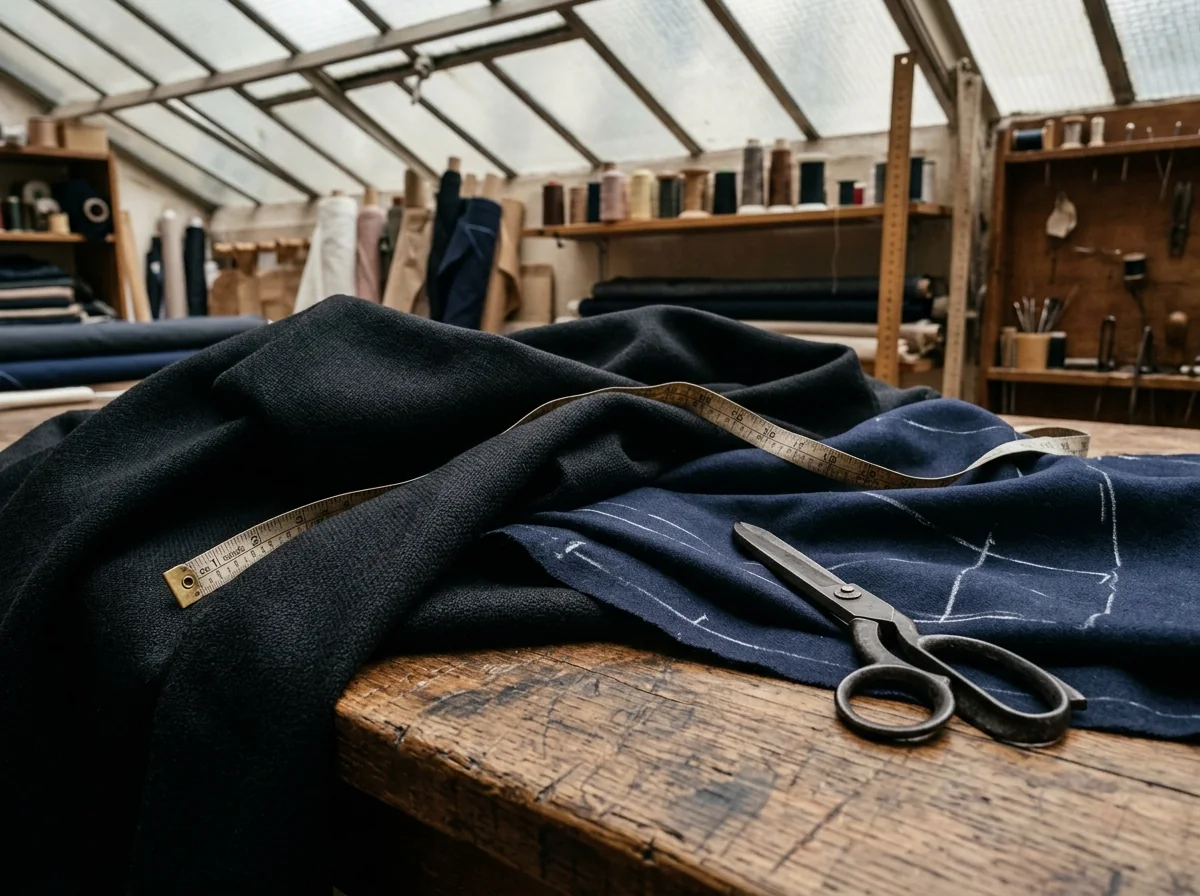
1. Textile minerality: A selection of heavy-weight fabrics (380 g/m²), dense twills, and wool fabrics with a pronounced texture that complement the mineral-like texture of urban concrete.
2. Invisible magnetic seal: Elimination of visual clutter by integrating sealed neodymium magnets into the trim.
3. Shadows and low-angle light: Clean cuts and deep pleats that create striking contrasts of light as the body moves.
French elegance: Artisanal precision and Parisian flair
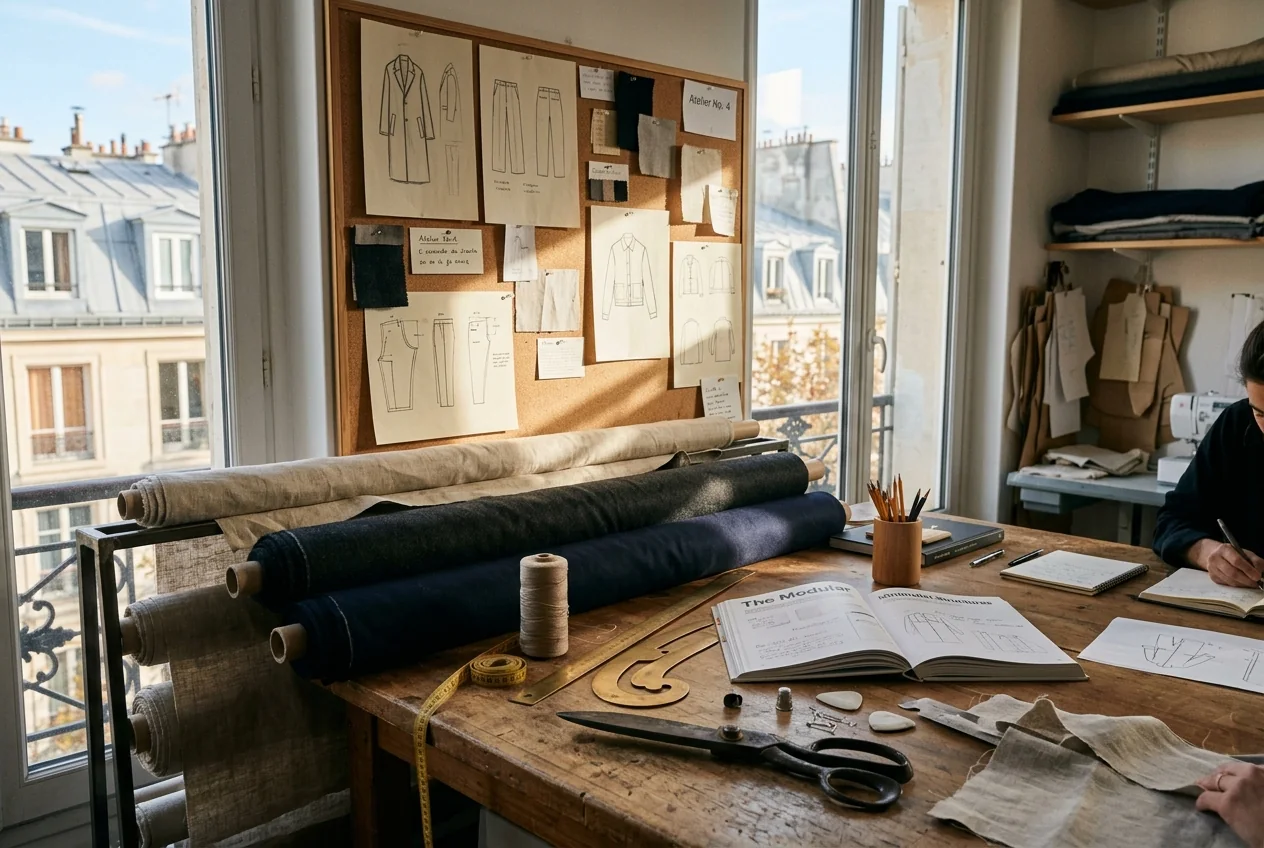
While Japan brings the wisdom of emptiness and Tadao Ando the radicality of form, Paris infuses Kanten with its immense tradition of patronage and its exacting workshop standards. According to Kanten, French elegance does not lie in flashiness: it is concentrated in what master tailors call the fall.
The drape is gravity tamed. It’s the mathematical certainty that a loose-fitting, generously cut garment will maintain impeccable poise, whether worn buttoned up during a brisk walk through the Marais neighborhood or left to float freely in a summer breeze.
To ensure this exceptional performance, we made two uncompromising decisions:
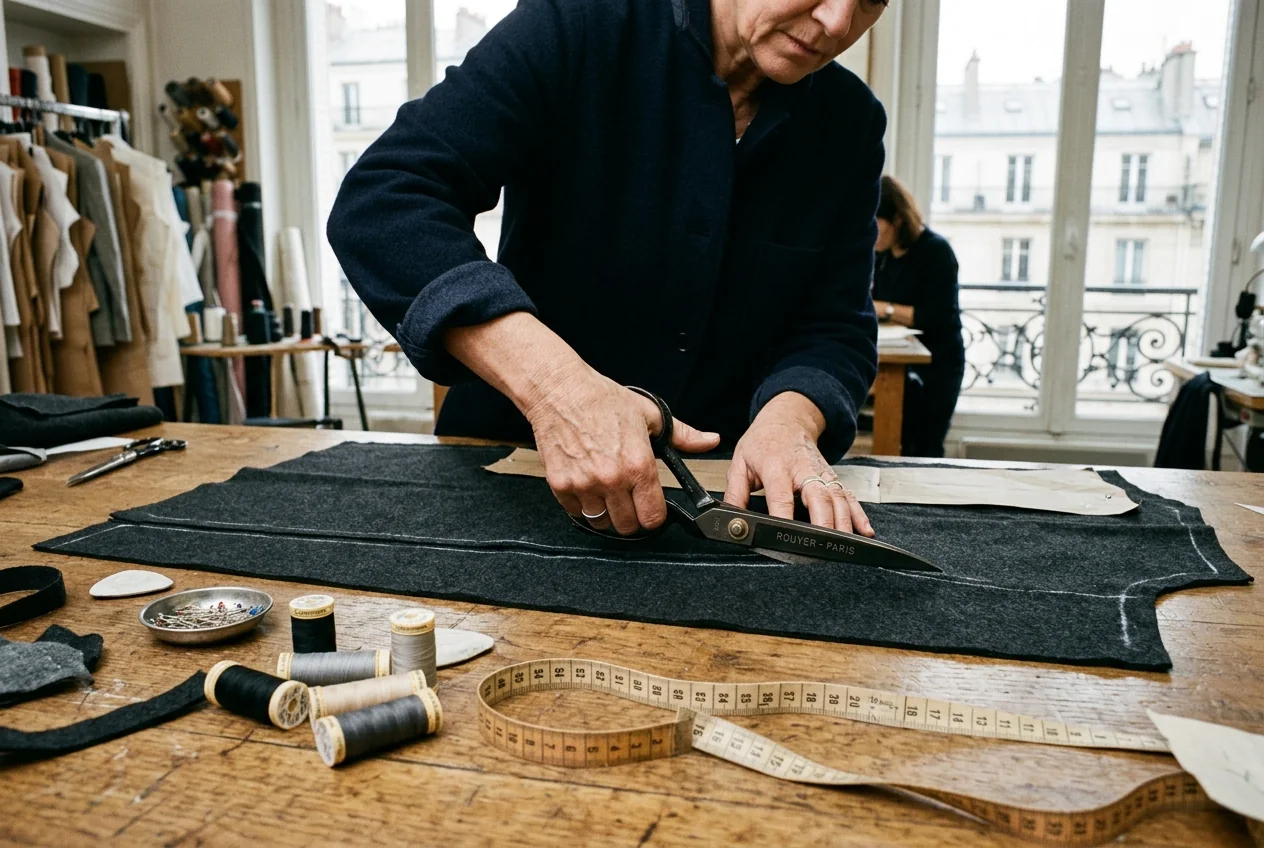
- Local clothing production in Paris in small batches: All of our magnetic components are assembled at our partner workshops in Le Sentier. This short supply chain allows for precise control over every stitch, every trim edge, and the sealing of our magnetic modules. Learn more about our Handcrafted in Paris.
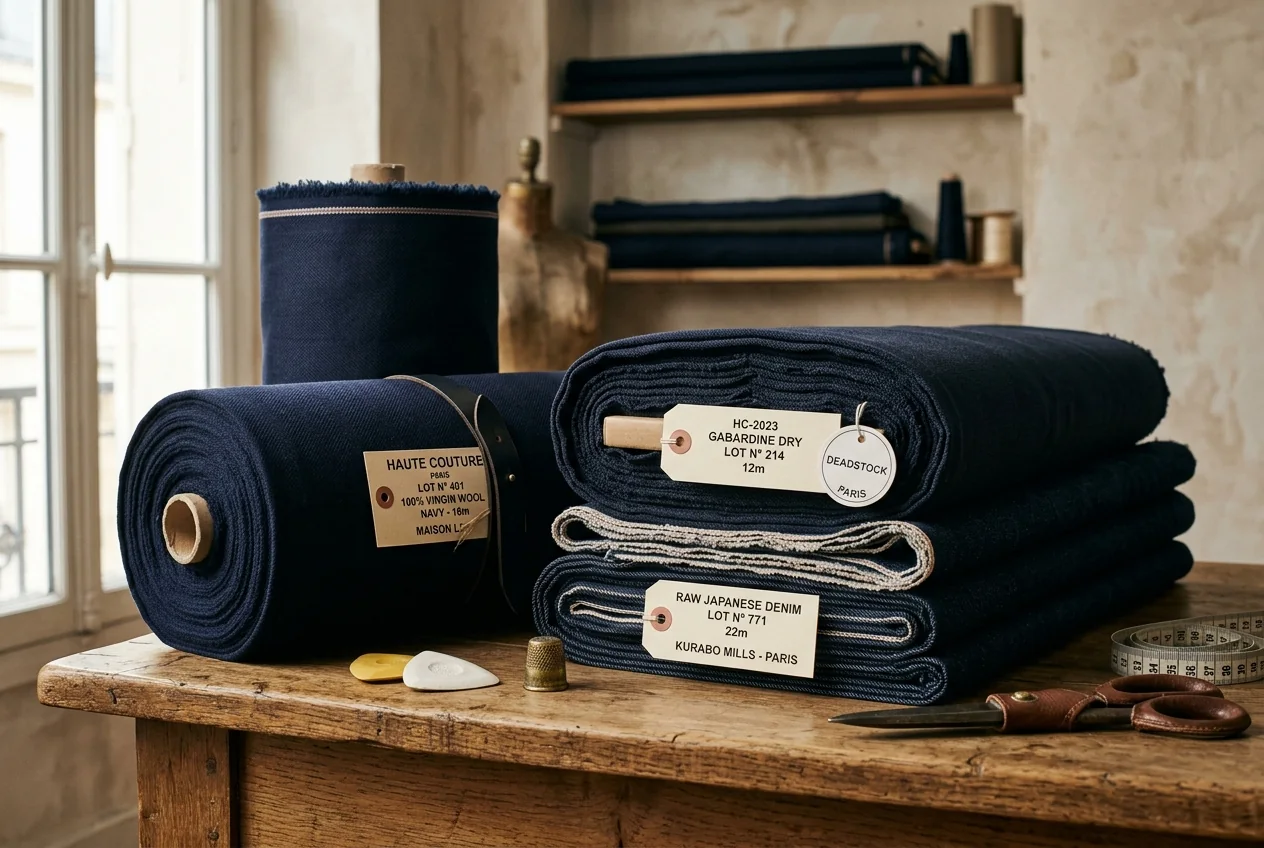
- Upcycling haute couture deadstock: We source end-of-roll remnants and surplus fabrics from the most prestigious French fashion houses. Exceptional woolens, heavy silks, and technical poplins are saved from oblivion to become one-of-a-kind, numbered pieces. Discover our process for'luxury upcycling.
Create Less, Embrace Silence: A Sustainable Vision of Silhouette
In the face of the unchecked acceleration of fast fashion, Kanten has chosen to create a wardrobe that is timeless, durable, and repairable. Each garment is designed to stand the test of time without losing its style, acquiring that elegant patina so cherished in the aesthetic of the wabi-sabi.
This philosophy extends to our entire creative ecosystem:
- The Permanent Wardrobe: Unisex architectural styles to discover in our Online Store.
- The Graphic Design Studio: Customize your limited-edition pieces in our interactive studio Custom Lab.
- Sound Frequencies: A selection of downtempo, Japanese jazz, and textured techno streamed from a 33⅓ RPM turntable on Kanten Radio.
- Our Partner Stores: Come try out our pieces and experience the dramatic drape at our authorized dealers in Paris (Sélection Marais, L'Habit Français) and in Nice (ICI Concept Store).
To learn more about our overall approach and understand how our company was built between Berlin and Paris, check out the original article at The Kanten Project or our investigation into the history of the Flupke jacket.
Matching pieces in the Kanten wardrobe
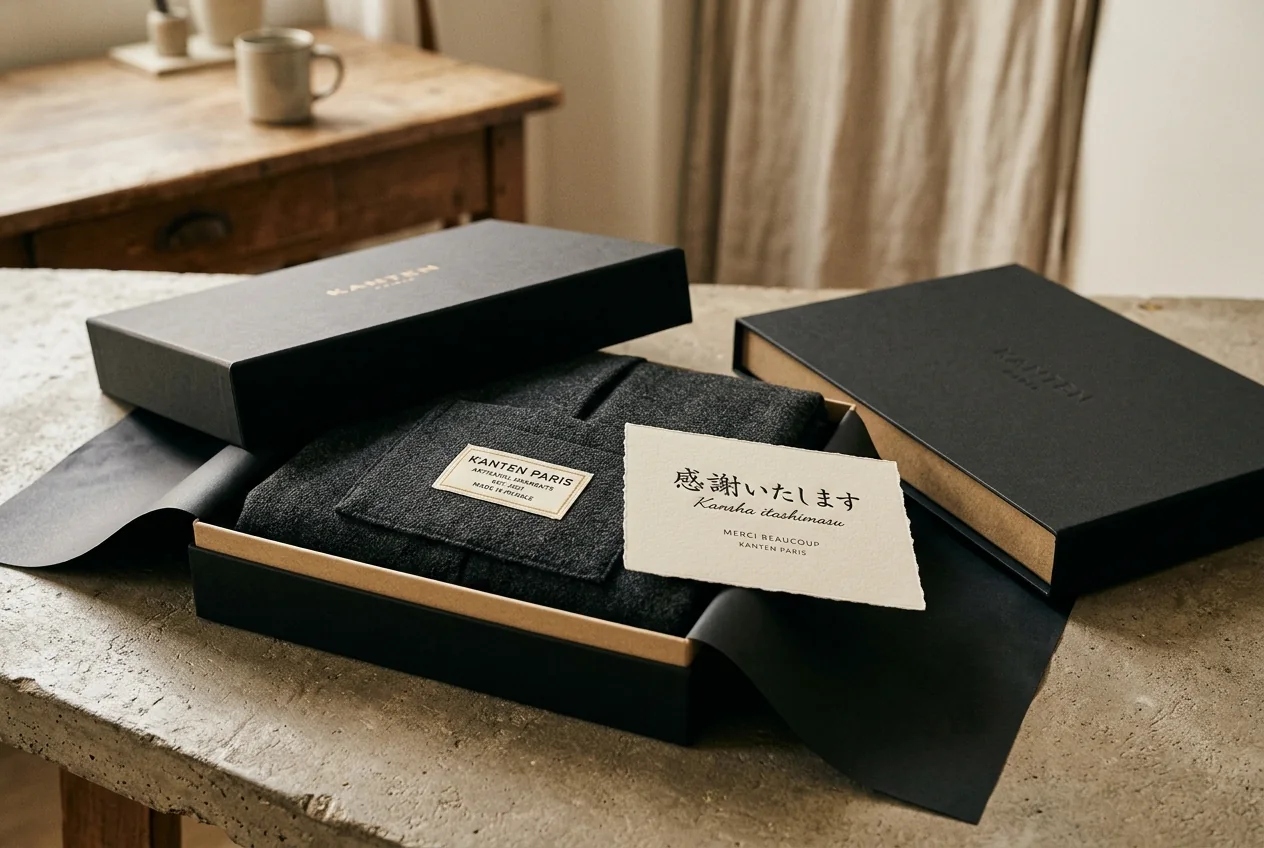
Hanpi Shirt — Olive & Navy
Straight collar inspired by the Japanese samue, invisible magnetic closures under the placket, heavyweight cotton twill.
Haka Pants — Mineral Black
Deep pleats inspired by the traditional hakama, with a sharp tailored cut, made from high-quality cotton gabardine.
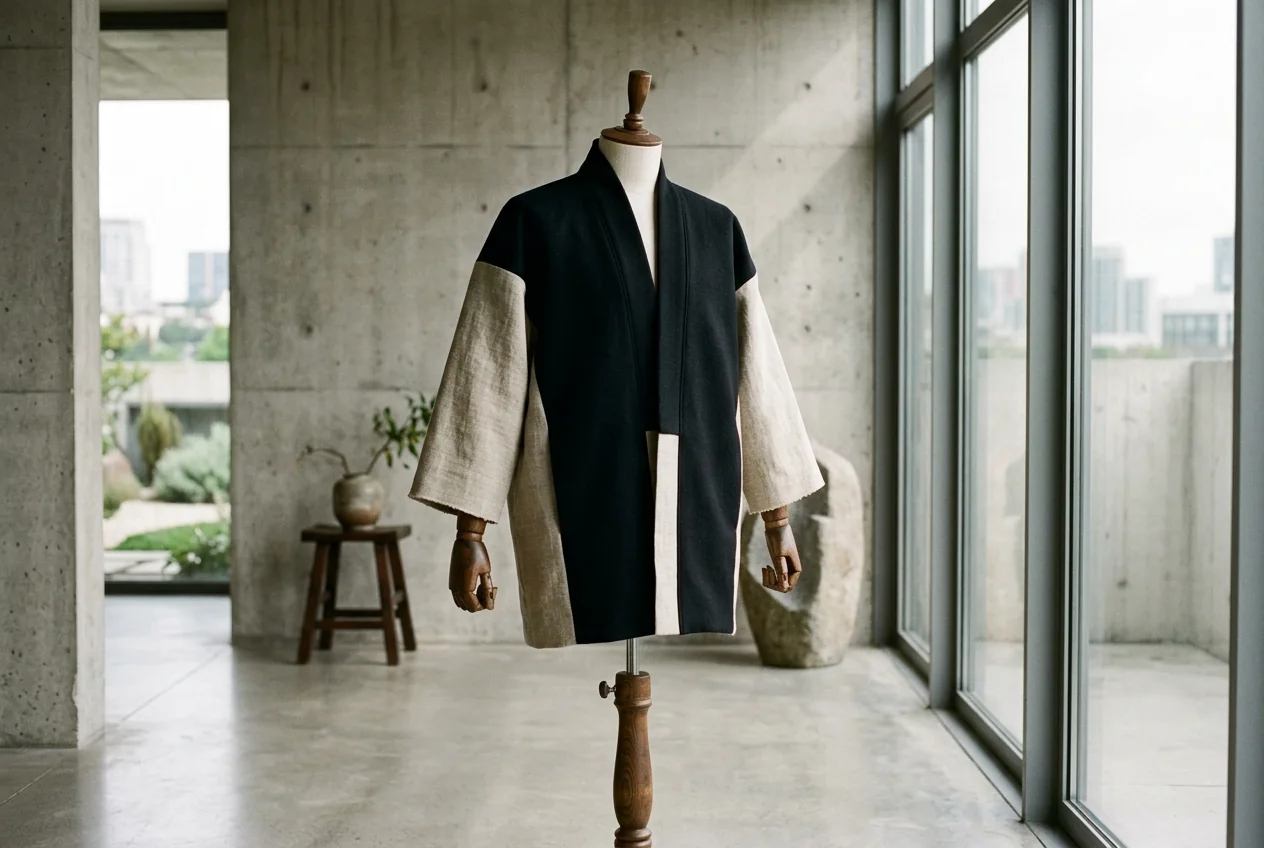
Flupke Jacket — Deep Black
Contemporary Hanten cut, upcycled wool fabric from a fashion house, sealed neodymium magnets.
 English
  French