
IThere was a time when Paris was the global mecca of textile craftsmanship, a bustling hive where every street corner echoed with the rhythmic clatter of industrial sewing machines and the muffled thud of heavy cast-iron irons. Over the past four decades, the brutal wave of offshoring has stripped the capital of its workshops, shifting production to distant lands in the name of blind cost-cutting.
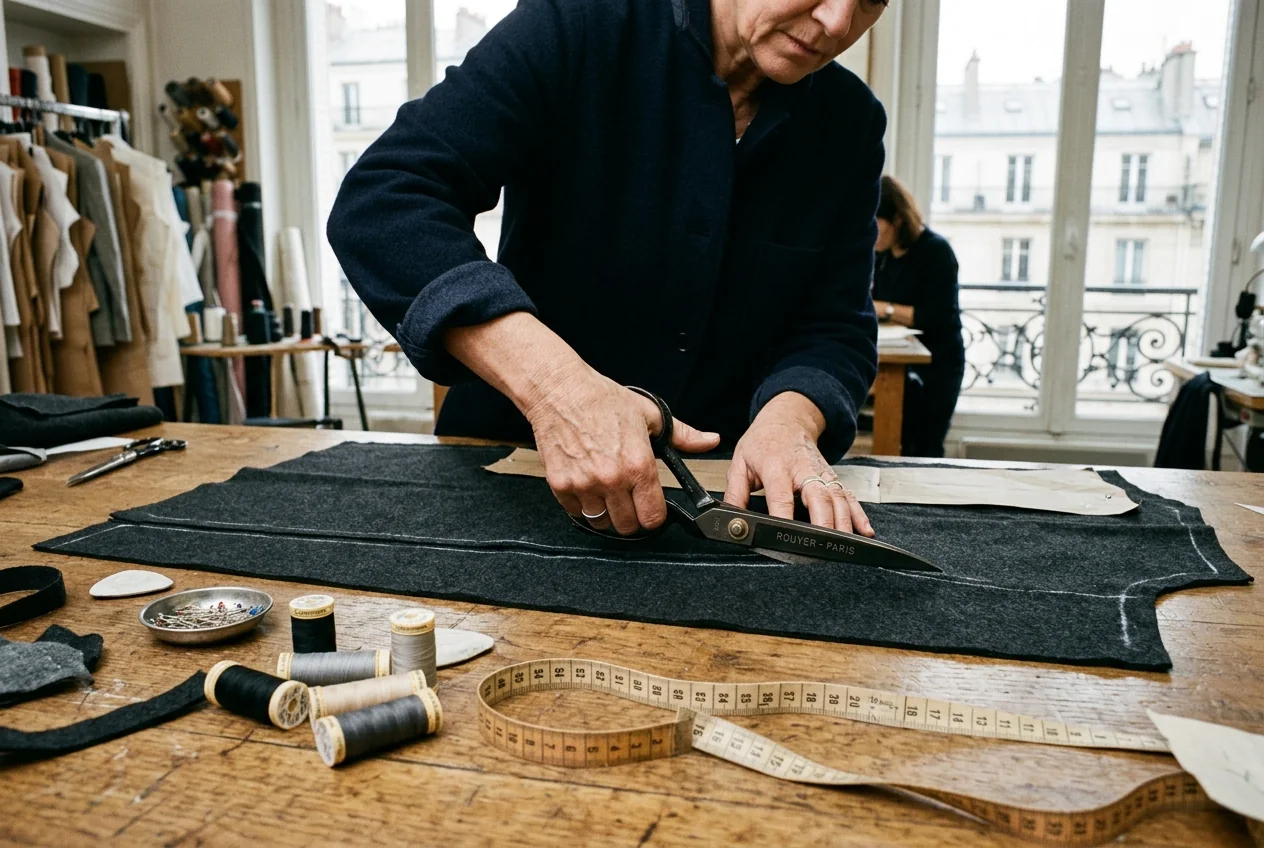
At Kanten, we refused to give in. From day one, we made the decision to relocate our pattern-making, our pattern design, and a significant portion of our garment production to the historic heart of the French fashion industry: the Sentier neighborhood in Paris. Maintaining a thriving in-house workshop is not just a marketing gimmick: it is the only way to ensure uncompromising quality in every stitch.
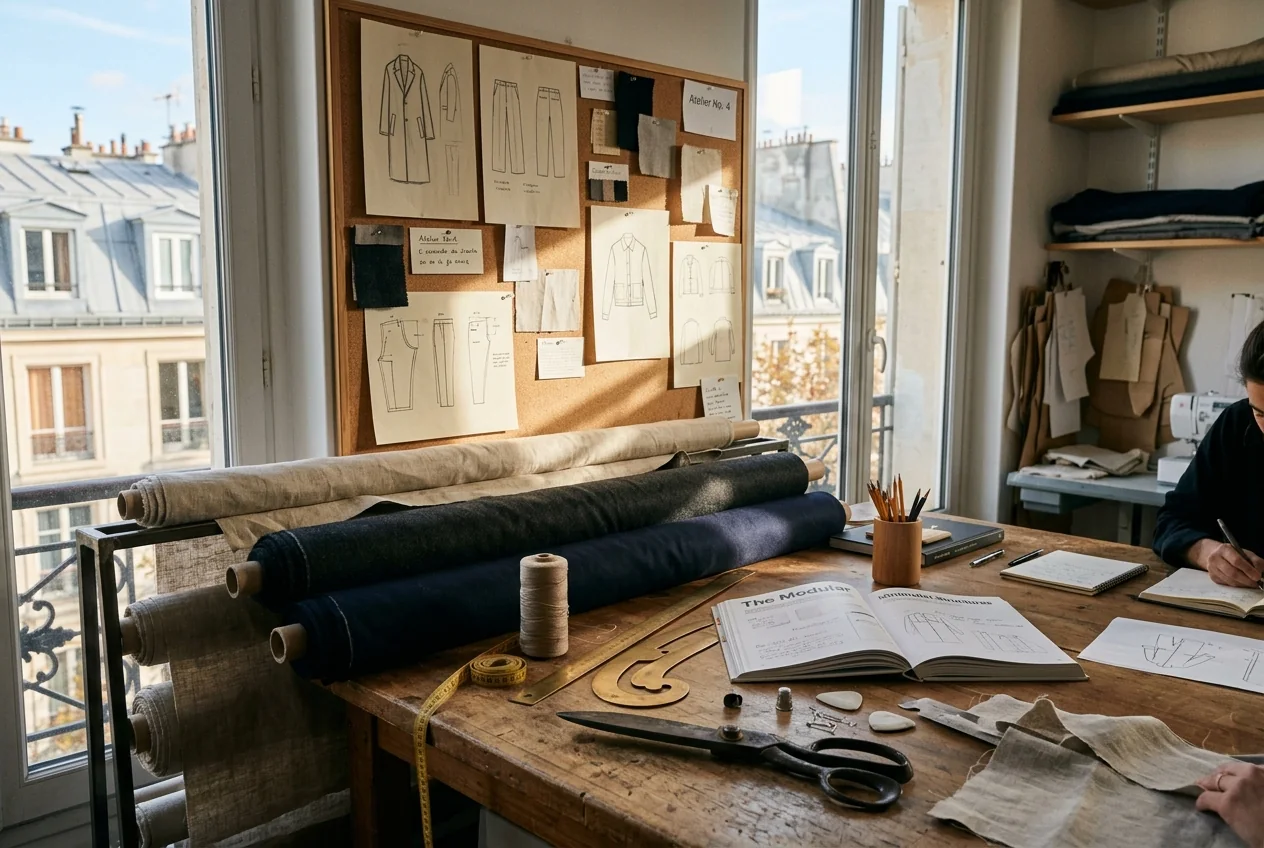
The Legacy of Le Sentier: When Model Making Becomes an Art Again
Working in Paris allows us to collaborate on a daily basis with artisans who have dedicated their lives to the art of clothing. Here, a pattern isn’t just a series of abstract digital vectors sent via email from 10,000 kilometers away: it’s a living material that we handle, pin onto century-old Stockman mannequins, and test on real bodies.
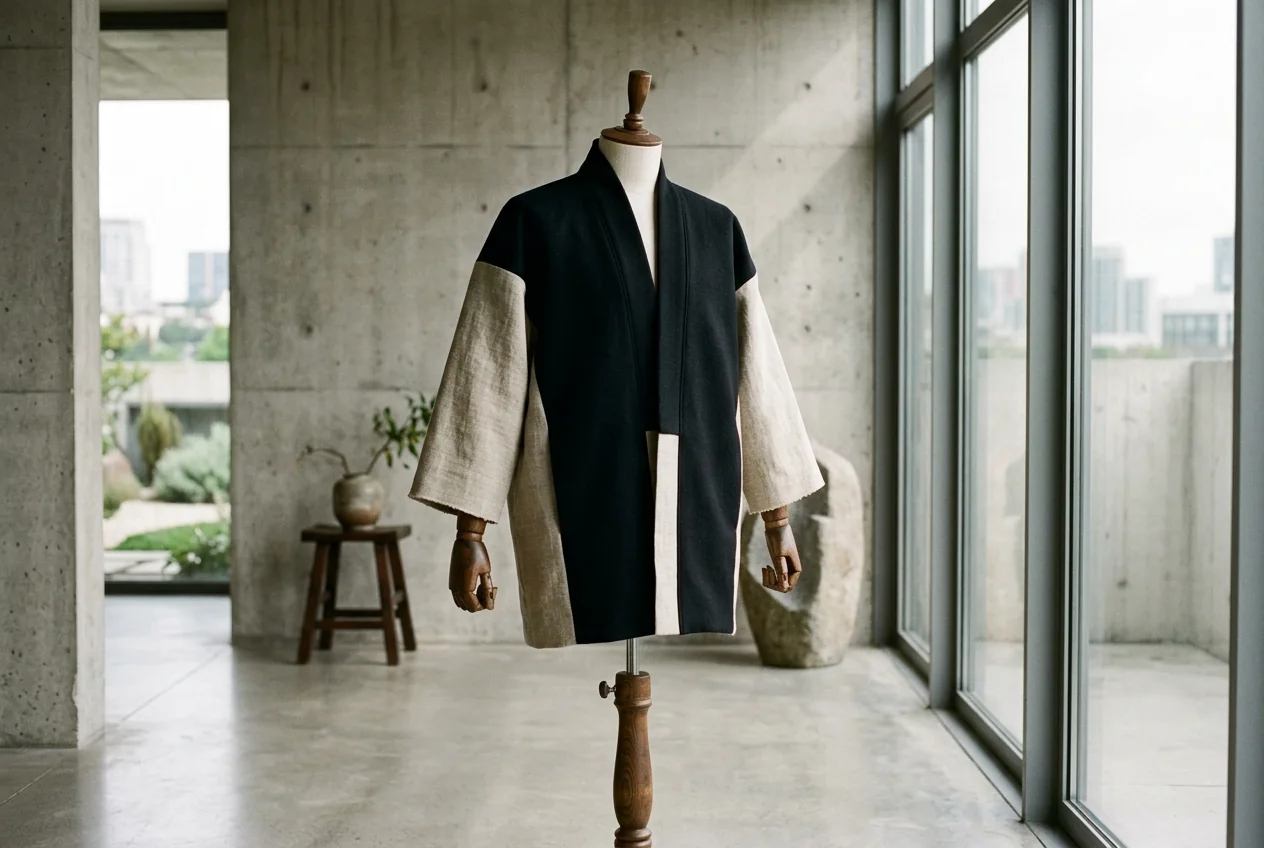
For each new model—whether it's our Flupke jacket or the Haka pants —, we produce between three and five intermediate «prototypes» made of unbleached calico. This fundamental step allows us to test the drape of an armhole, the tension of a collar, or the millimeter-precise positioning of our invisible magnetic closures. This cycle of immediate refinement is strictly impossible within the framework of standard outsourced production.
«By cutting out the middlemen and time zones, we can tweak a fold in the morning and test the revised prototype that very afternoon. That’s the ultimate luxury of local craftsmanship.»
Kanten Pattern-Making Workshop — 2nd arrondissement of Paris
The Anatomy of a Kanten Finish: English Seams and Piping
To judge the quality of a garment, you should never look at the right side—you must turn it inside out and examine the wrong side. In fast-fashion manufacturing, seam allowances are simply serged with a fragile synthetic thread that frays after a few washes.
In our Paris-based workshops, we adhere to the strict standards of haute couture tailoring:
- French seams: A sophisticated double stitch in which the raw edge of the fabric is completely enclosed within the seam. The result: a perfectly clean finish and significantly increased durability, with no visible threads to irritate the skin.
- The bias-cut inner binding: All armholes and facings are edged with fine organic cotton bias tape, giving the garment a fine tailor's finish.
- Saddle stitching points: The corners of the pockets and areas subject to critical stress are reinforced with hand-stitched reinforcements to withstand decades of use.
Less than 10 km from harvest to shipment
Did you know that a pair of jeans or a coat made using conventional manufacturing methods travels, on average, between 40,000 to 65,000 kilometers before ending up in a European closet (cotton grown in India, spun in China, woven in Pakistan, dyed in Bangladesh, and sewn in Cambodia)?
At Kanten, our logistics operations are kept to an absolute minimum:
- Pattern-Making & Model-Making Workshop: Paris 2nd Arrondissement
- Cutting & Sewing Workshop: Paris & Nearby Suburbs
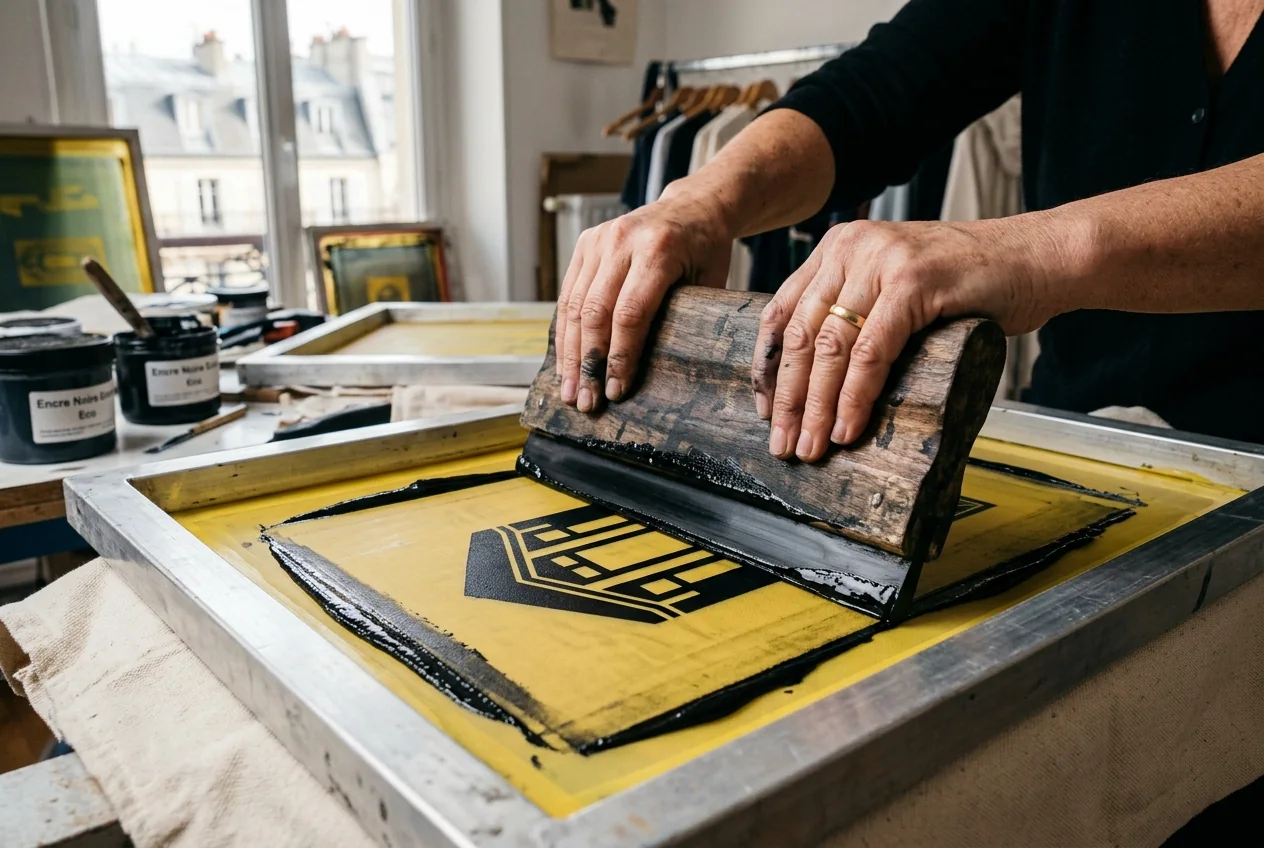
- Artisanal Screen Printing Workshop: Paris, 11th Arrondissement
- Order Storage & Shipping: Paris
The result: a near-zero carbon footprint for transportation and continuous visual inspection of the 100% on the production line.
Fair Wages: Defending Workers' Dignity
Local production comes at a clear cost. At Kanten, every euro invested in our products provides fair compensation to skilled professionals working in accordance with French labor laws, in heated, well-lit workshops that prioritize workers’ health and safety. We categorically refuse to base our profit margins on the exploitation of people on the other side of the globe.
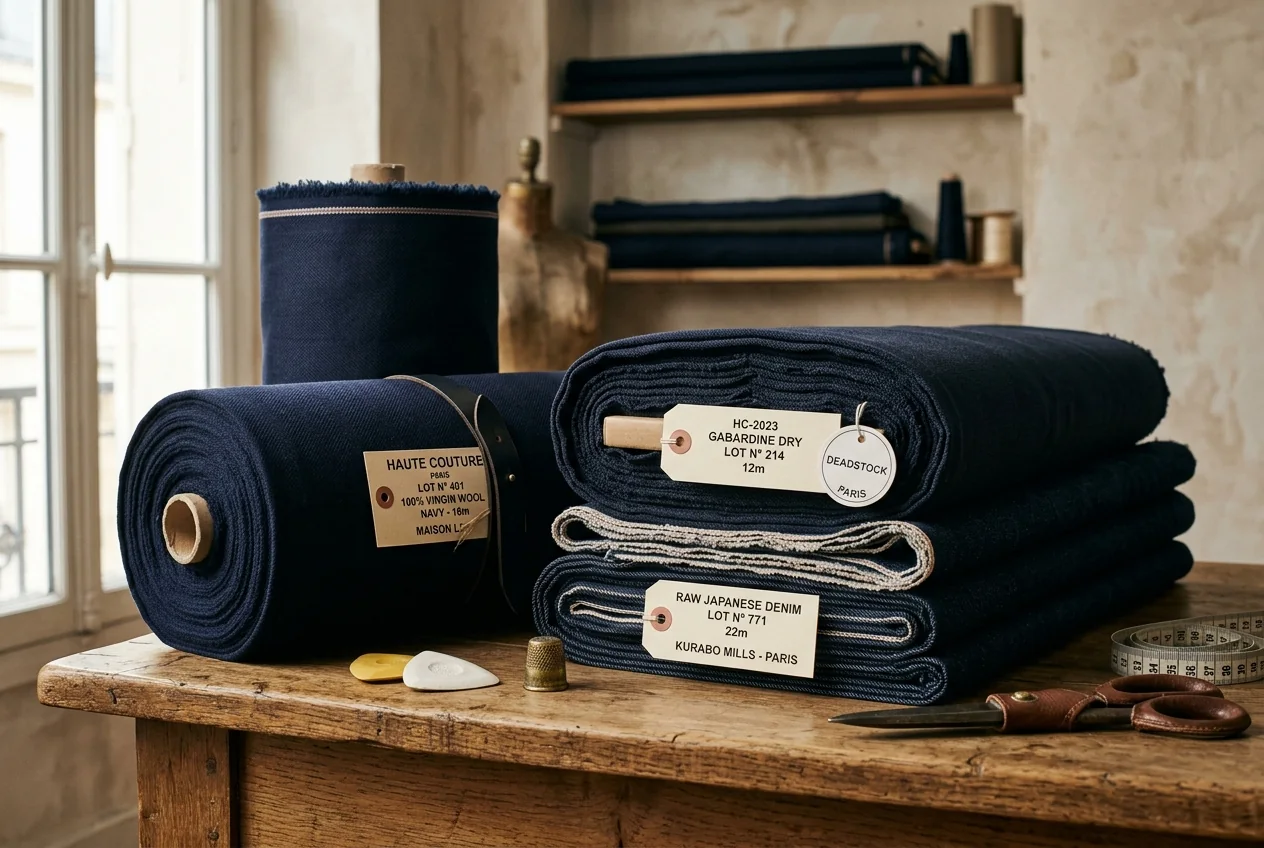
This demanding choice is inextricably linked to our work on Upcycling dormant luxury inventory and our commitment to building la mode d'après : understated, sustainable, and deeply human fashion. Explore our entire collection in the Kanten Store.
Matching pieces in the Kanten wardrobe
Taisho Coat
Clean lines and an enveloping design, handcrafted and assembled in our Paris workshop.
Haka pants
A fluid-fitting jacket made of heavy cotton gabardine, with reinforced English seams and ease darts.
The Kanten Manifesto
Understand our vision of a wardrobe free from the toxic pace of overproduction.
 English
  French