
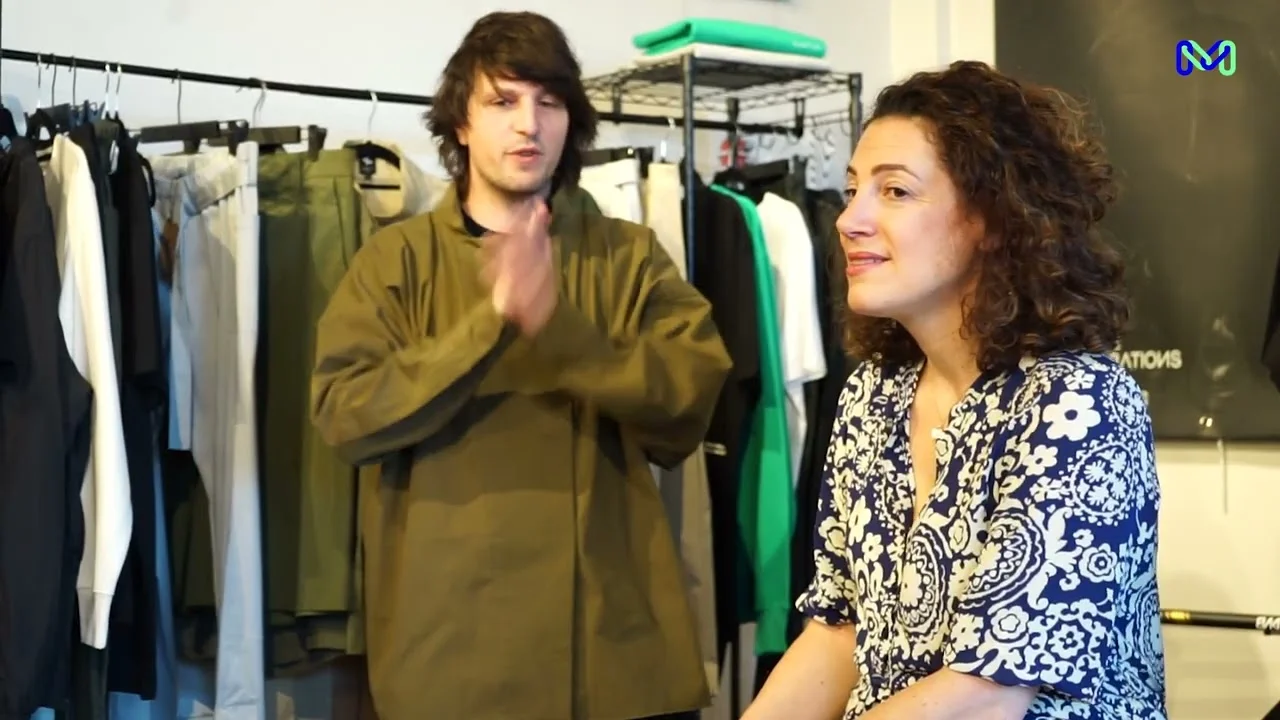
IThere are life paths that defy expectations. Nothing predestined Stéphane—a student passionate about physics and the architecture of matter—to become a patternmaker and the founder of a Parisian designer clothing line. Yet when you observe the millimeter-precise craftsmanship of a Kanten jacket—the purity of its lines, free of superfluous seams, and the understated magic of its invisible magnetic closures—the connection between materials science and haute couture tailoring becomes strikingly clear.
In an in-depth, intimate interview, Stéphane reflects on the foundations of his career, the liberating turning point of his childhood, his discovery of patternmaking, his formative years in the Sentier district, and his vision for a timeless wardrobe, free from gender norms and overproduction.
01. From the lab to the workshops on the Sentier: A Model Builder's Journey
My relationship with clothing began very early, around the age of 7. My mother didn’t buy me ordinary clothes: she would take me to outlet stores where men’s and women’s clothing were mixed together in large bins without price tags. One day, my eyes fell on an unlikely jacket—a sort of fishing net—that was definitely not meant for a seven-year-old. After I insisted, my mother said:
«Listen, if you want to wear it, people will be looking at you, not me. From there, do whatever you want.»
What My Mom Told Me When I Was 7 — Kanten's Creative Compass
I wore it to school the very next day. It caused quite a stir in the playground, but it was a defining moment for me: clothing was a direct form of language, a space for empowerment and unfiltered expression that allows you to break the rules and express yourself without saying a word.
However, I didn’t gravitate toward fashion right away. I first pursued a university degree in nanotechnology: I wanted to become a researcher in materials science, fascinated by futurism and the intrinsic properties of materials. By the end of my sophomore year, the reality of life in a lab caught up with me: a lot of silence, a somewhat dull world. I thought to myself: if I’d had two lives, I would have devoted one to research; but since we only have one, I switched to my first passion—the one that stirred me the most deeply.
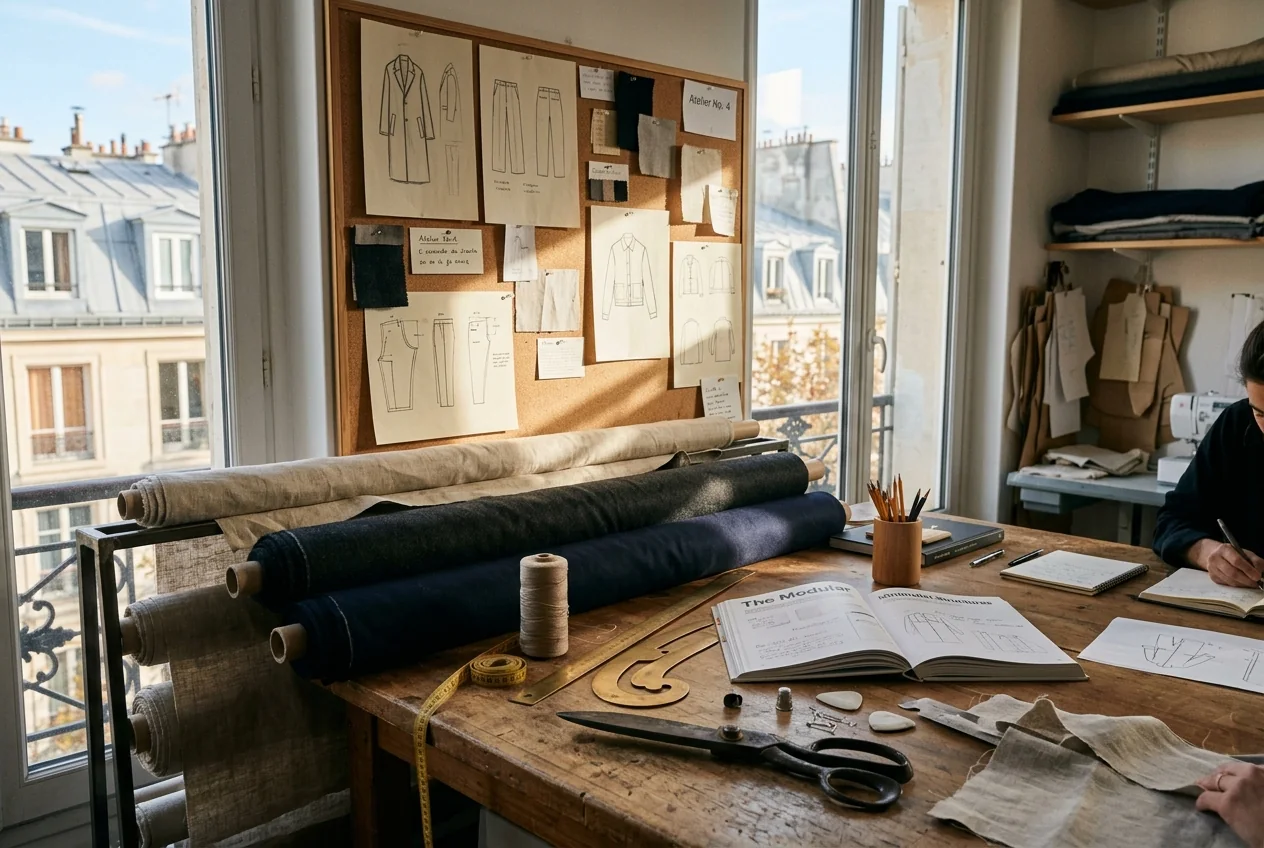
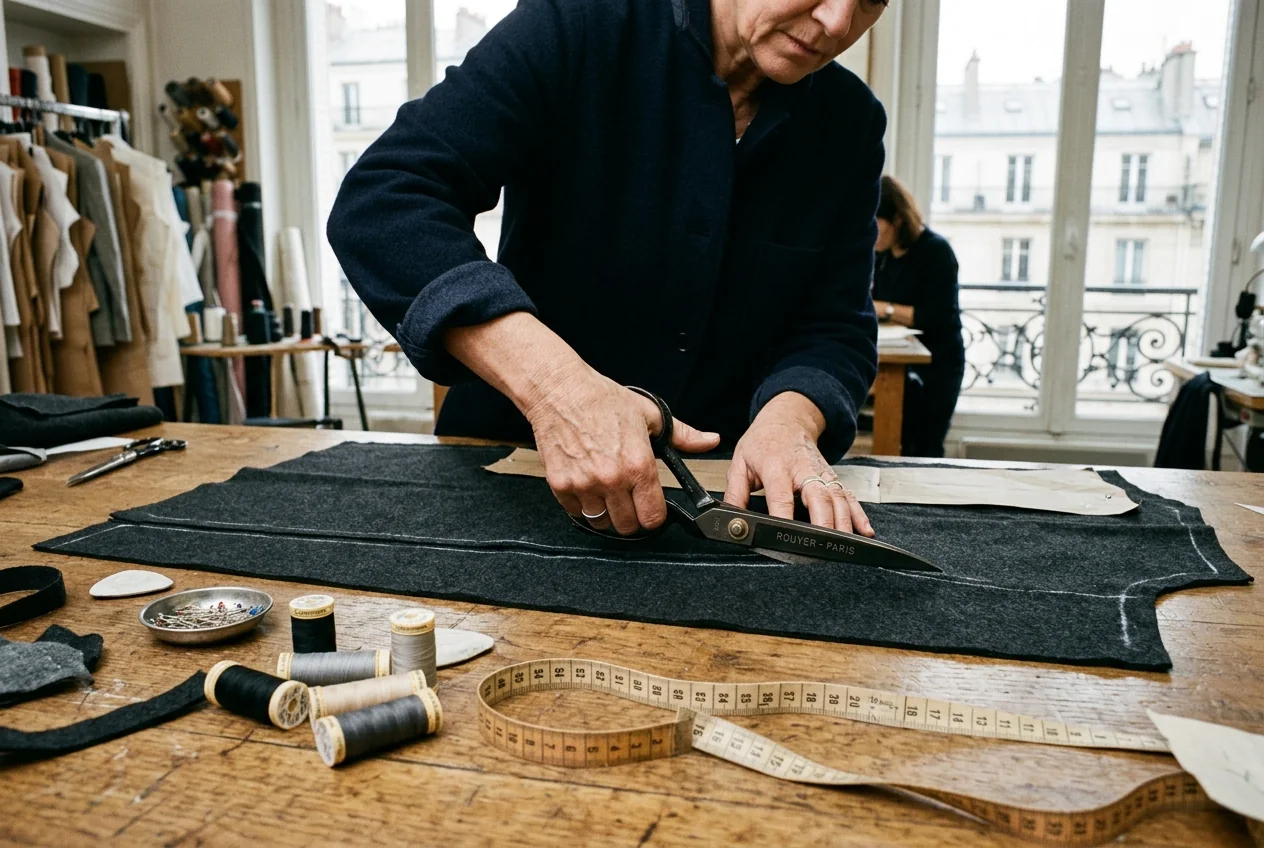
I then enrolled in the evening pattern-making and sewing classes offered by the Paris City Hall. What really fascinated me wasn’t fashion design—creating fleeting narratives that change with the seasons—but patternmaking in its purest form: cutting, geometry, defining shapes, and constructing volume around a body in motion.
After a stint in Berlin, where I designed my first prototypes and presented three complete collections at Fashion Week in 2013, I realized that making clothes at home and overseeing industrial production in a workshop were two entirely different worlds. So I returned to Paris and worked for other fashion houses, eventually becoming a production director. For several years, I learned the trade from the inside out: industrial grading, the technical jargon of the Sentier workshops, fabric sourcing, and the precision of an assembly line. In 2020, armed with this technical expertise, I officially launched Kanten.
02. The Obsession with Ergonomics: Where did the idea for a magnetic coat rack come from?
The idea was born out of a genuine obsession with ergonomics and fluidity. I can’t stand it when a garment resists movement—when it’s difficult to put on, fasten, or take off. Clothing should conform to the body like a comfortable second skin.
It all started with a very practical problem I encountered while drafting a pattern for Japanese-inspired cargo pants: the bottoms were fitted at the ankle to define the leg line. But to avoid «pulling my foot off» every time I took them off, I incorporated a discreet magnet into the bottom drawstring tab. Now, taking them off is instant, intuitive, and effortless.
Permanent airtight seal: Our N52-grade neodymium magnets are encapsulated beneath the interior linings. Wear-resistant and rustproof, they retain 99% of their magnetic strength for over a century—without plastic buttons that need to be sewn back on or metal zipper pulls that come off the track.
Realizing just how comfortable they were, I extended the concept to shirts (our signature style Hanpi) and outdoor coats (Flupke jacket, Taishô Coat). Traditional buttons force you to take off your gloves in the middle of winter, and zippers always end up warping when you sit down. With our invisible magnetic closures, the garment fastens with an instinctive, one-handed motion: click, click.
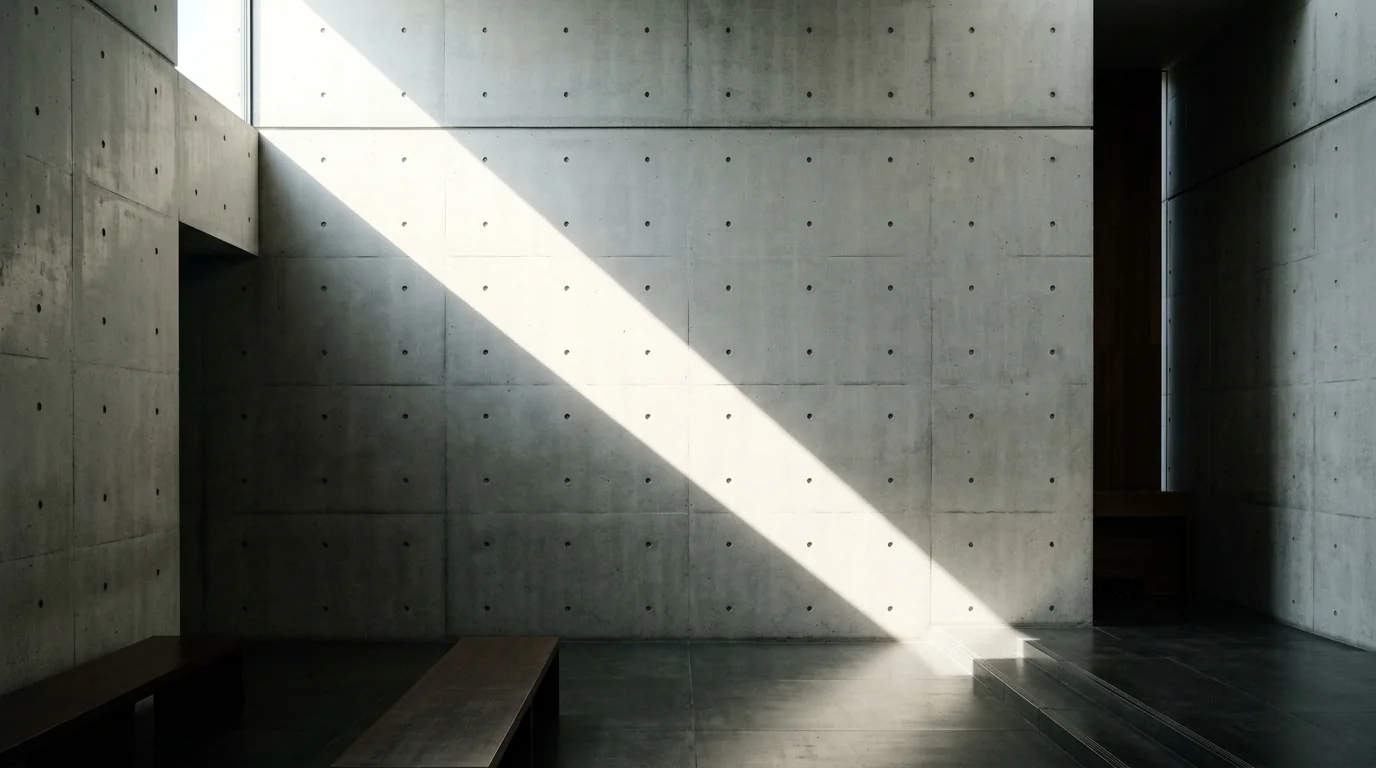
Beyond the very satisfying feel—which has a bit of a «James Bond» or futuristic vibe to it—there’s a key architectural reason: the magnet eliminates the visual clutter of buttonholes and exposed zippers. It’s the sartorial equivalent of the hidden seam so cherished by architect Tadao Ando: two clean panels that come together in a perfectly continuous line.
03. Unisex as a Founding Principle: Free the body from all constraints
Because, to me, clothing has never had a gender. Ever since I was a child, I’ve picked out clothes from both the men’s and women’s sections without ever questioning it or worrying about labels.
When we approach clothing from the perspective of patternmaking and spatial structure, we realize that the body is, above all, a living architecture that needs freedom of movement. Traditional fashion conventions often confine men to rigid austerity and women to constricting silhouettes subject to a frenzied cycle of disposable micro-trends.
Drawing inspiration from traditional Japanese cuts—the hanten Edo artisans, the noragi the fields or the deep pleats of martial arts pants hakama —, I work with straight silhouettes, low armholes («drop-shoulder»), and clean, vertical drapes. These architectural lines don’t need a gender label: they flatter, enhance, and liberate all body types. At Kanten, unisex isn’t just a trendy concept—it’s the starting point for every cut made on the pattern.
04. Kanten (Perspective): Perspective as a Signature and a Creative Mirror
In Japanese, the word Kanten (観点) means «point of view» or «perspective.».
This name encapsulates our company’s entire approach on two fundamental levels:
- My Take on Fashion: This is my perspective as a craftsman and designer, inspired by Japanese minimalism, architectural brutalism, and Parisian haute couture upcycling—a direct departure from the destructive overproduction of fast fashion.
- The gaze of the person wearing it: Kanten doesn’t impose a fixed identity. We offer minimalist pieces—like a blank canvas or a soft armor—that everyone can make their own based on their own perspective. That’s the whole point of our interactive studio. Custom Lab, where our customers can customize the geometric patterns on our premium flex materials to express their own unique style.
05. How it feels to wear Kanten: Ma (間) and the Benevolent Armor
Above all, I hope that people who wear Kanten will experience an immediate sense of lightness and freedom.
In Japan, there is a concept known as Ma (間), that space between the fabric and the skin where air and the body breathe. When you put on a Kanten piece, I want you to forget about physical constraints: no tight collars, no seams that dig into your back when you hop on your bike or get on the subway. The garment flows freely, moves with your stride, and exudes a calm presence.
There’s also that very special tactile pleasure: the satisfaction of the magnetic «click» and the feel of exceptional fabrics—our woolens, gabardines, and silks come from leftover rolls sitting idle at the greatest French haute couture houses (Dior, Hermès, Mugler, Gérard Darel...). It’s like wearing a soft, protective armor that discreetly signals status, without ever needing to shout your affiliation with a flashy logo.
06. The Founding Quote: Choosing Assertiveness
«If you want to wear it, people will be looking at you, not me. From there, do whatever you want.»
What My Mom Told Me When I Was 7 — Creative Compass by Kanten Paris
This quote from my childhood stays with me every day in the studio. It captures the courage to embrace one’s uniqueness, to design unconventional silhouettes, and to never compromise on the authenticity of one’s work.
07. What are your plans for the future? High-fashion boutique, live workshops, and hybrid venue
The Kanten collection is structured around three main themes that build on our vision of free-spirited and welcoming craftsmanship:
1. Expanding the couture wardrobe
We will continue to develop our architectural pieces featuring magnetic closures—wraparound winter coats, new variations on urban kimonos, and structured pants—always in very limited runs, handcrafted in Paris from high-quality upcycled fabrics.
2. The Expansion of the Custom Lab and Participatory Workshops
Following the excellent reception of our pop-up shop (particularly during our three-month residency at the store Small Is Big (in Saint-Ouen), we want to expand our range of interactive formats and live workshops to allow customers to co-create and customize their graphic designs in real time.
3. A hybrid lifestyle destination: fashion, specialty coffee, and music
I'm passionate about cooking, specialty coffee, and music (in fact, we've launched our own independent web radio station, Kanten Radio). At the pop-up shop, I set up my espresso machine and my homemade cookies—so much so that some customers affectionately called me «the cookie guy»! My dream for the coming years is to blend these worlds: to create a permanent space that combines a model-making workshop, a designer’s boutique, cutting-edge music, and a coffee and pastry counter—all to offer a complete sensory experience.
Matching pieces in the Kanten wardrobe
Hanpi Shirt — Olive & Navy
Straight collar inspired by the Japanese samue, invisible magnetic closures under the placket, heavyweight cotton twill.
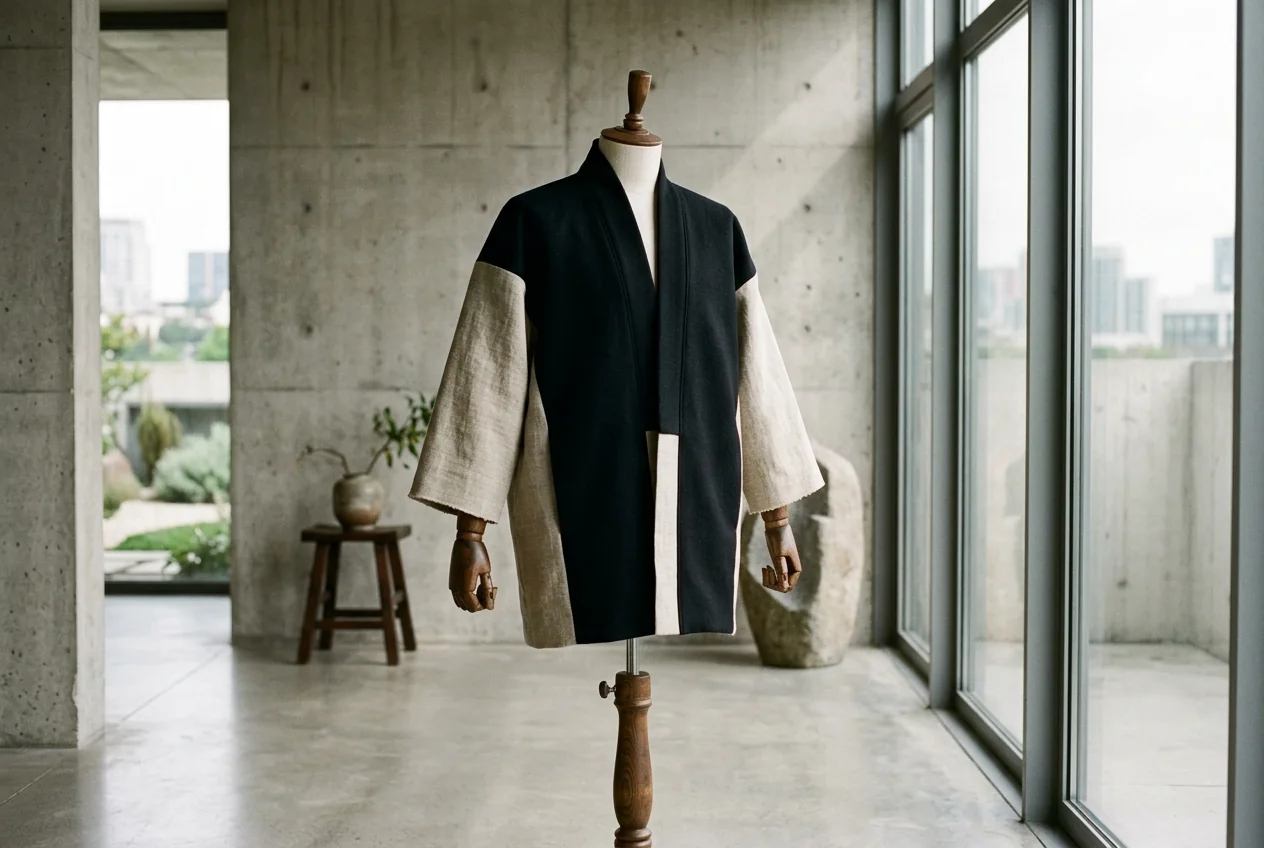
Flupke Jacket — Deep Black
Contemporary Hanten cut, upcycled wool fabric from a fashion house, sealed neodymium magnets.
Haka Pants — Mineral Black
Deep pleats inspired by the traditional hakama, with a sharp tailored cut, made from high-quality cotton gabardine.
 English
  French